
Quo Vadis electromobility?
Following the discontinuation of subsidies for private e-vehicles in mid-December 2023 and commercial electric vehicles on 1 Sept. 2023, new registrations in the first half of 2024 slumped by over 16% compared to previous year. The German government's goal of putting 15 million BEVs on Germany's roads by 2030 is no longer realistically achievable. This is one of the reasons why many vehicle manufacturers are pulling the ripcord on the planned stop of combustion engines or postponing the phase-out. An adapted strategy to achieve the ‘zero CO₂ emissions’ target from 2035, taking e-fuels into account, is also on the agenda of numerous OEMs.
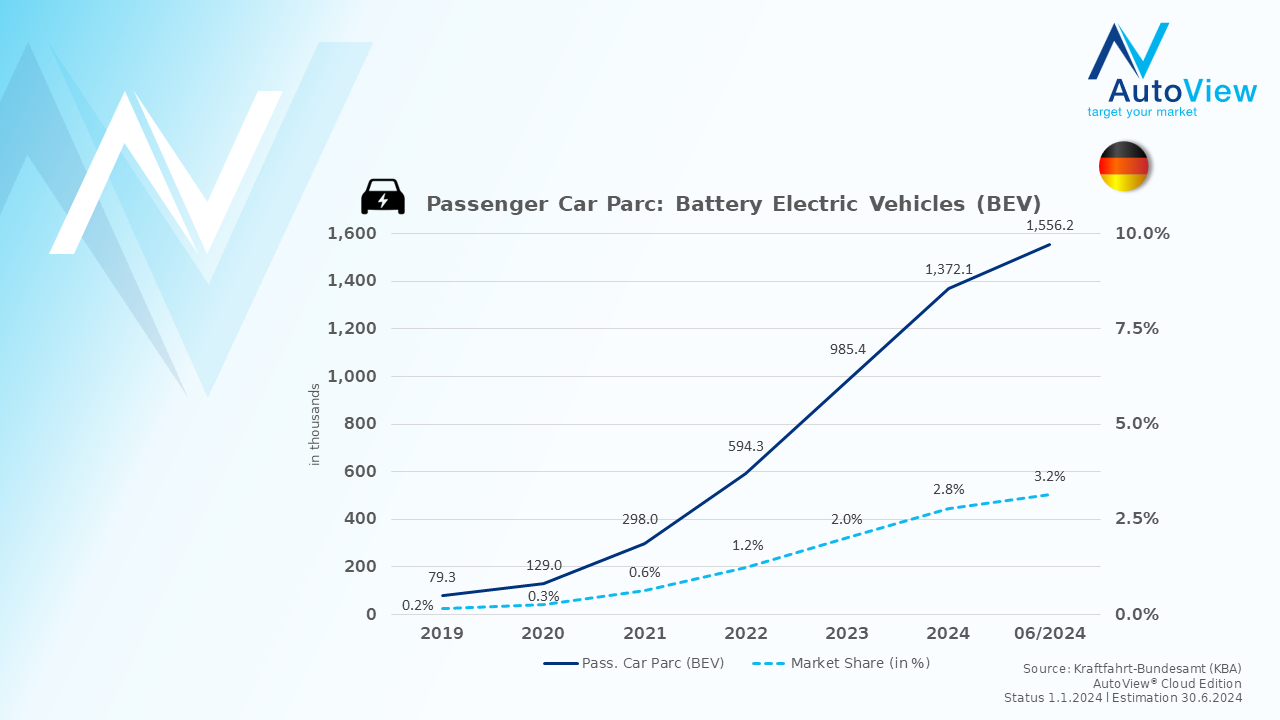
According to the KBA car parc as of 1 January 2024, just under 1.4 million BEVs were officially registered. If the new registrations in the first half of 2024 are included, the number of pure BEVs is a good 1.55 million vehicles - this corresponds to a market share of 3.2% in relation to the total number of passenger cars.
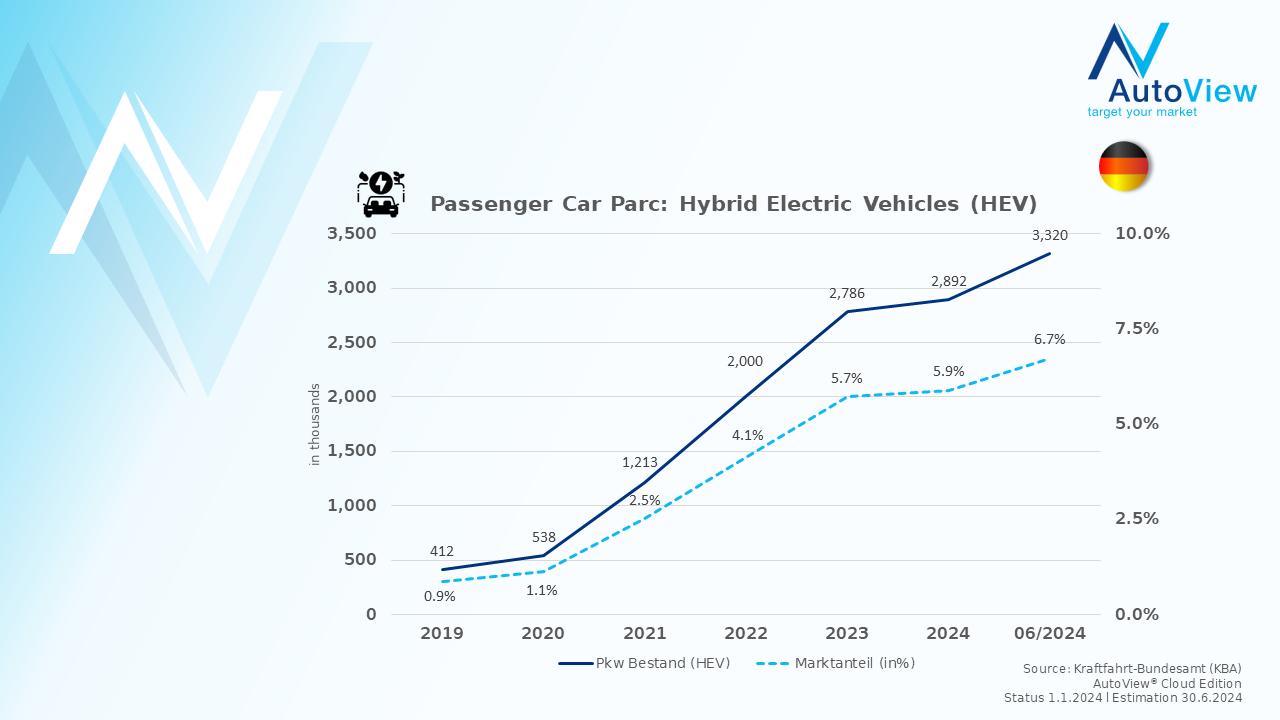
Hybrid electric vehicles (HEVs) performed better in the first half of 2024. In terms of new registrations, hybrid vehicles scored +12.5% in the first half of the year compared to the same period last year. This means that there are currently more than 3.2 million HEVs on our roads. This corresponds to a market share of around 6.7% of the total vehicle population. HEVs have thus recovered from the stagnation in the comparison of vehicle numbers in 2023/24.
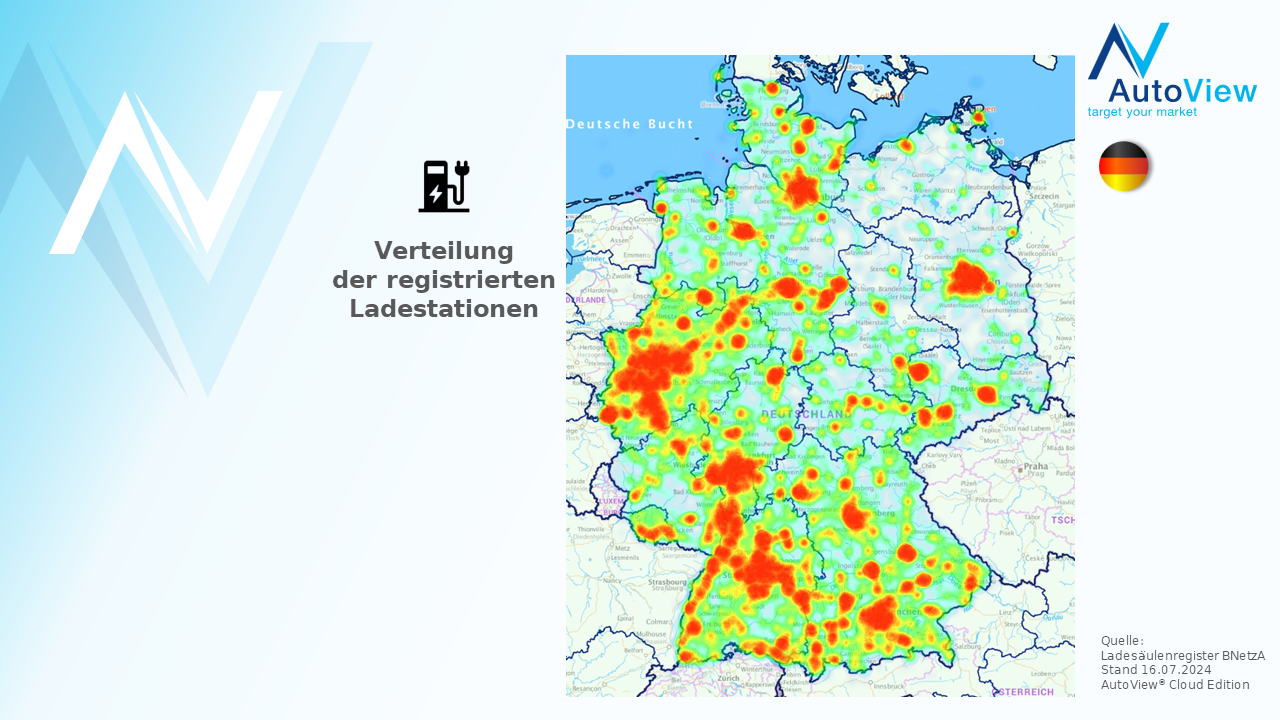
As of July 2024, the Federal Network Agency had published a good 100,000 normal charging points and a good 25,000 fast charging points. But what is the geographical coverage like? We have analysed this using the heat map technology of our new AutoView® Cloud Edition. It is clear to see that the distribution is concentrated in urban centres and metropolitan areas, but that there are significant gaps in the rural regions of Mecklenburg-Vorpommern, Brandenburg, Sachsen-Anhalt and parts of Lower Saxony (Niedersachsen/Emsland).
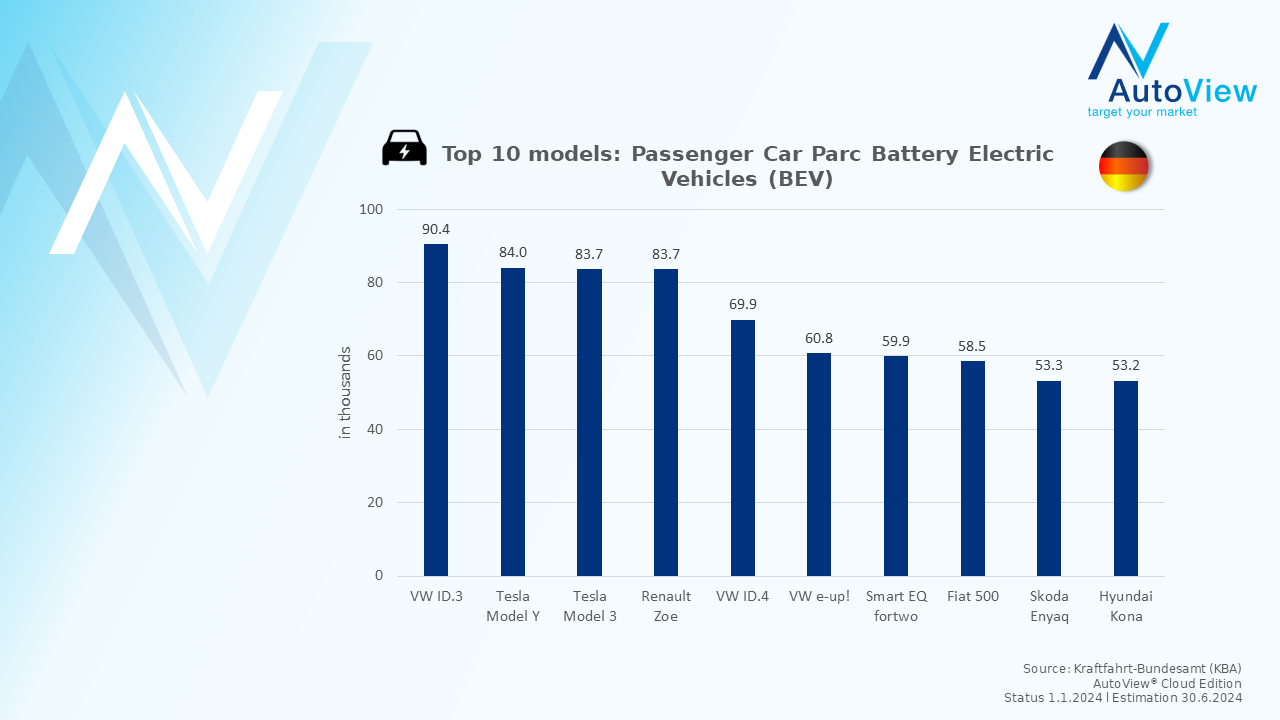
Here we show the top 10 BEVs in the German vehicle population. The top spot came as a surprise: it became clear after the model was discontinued that the Renault Zoe would not be able to defend its leading position. This position is now held by the VW ID.3, followed by the Tesla variants Model Y and Model 3. The VW e-up! and Smart EQ fortwo models have already been discontinued on the production side. Additional momentum is emerging here in the competitive environment of manufacturer models. The Škoda Enyaq has successfully positioned itself in the portfolio ranking of the top 10. It is also noticeable that the competitors and their respective models are very close to each other in car parc levels.
Have we aroused your curiosity? Then get to know our new AutoView® Cloud Edition and let us inspire you with the future! Make an appointment with us. We look forward to seeing you!